When you look at the WordPress ecosystem, it feels like there’s a plugin for everything: e-commerce, coaching funnels, recipe cards, corporate landing pages, and endless “business-friendly” templates that promise conversions, leads, and growth.
But if you’re a worldbuilder—a writer developing a fictional universe, a TTRPG Dungeon Master running an immersive campaign site, an indie game dev building a lore wiki, or a storyteller crafting a digital presence for your narrative—your options narrow fast. WordPress is the most widely used CMS on the planet… yet it has surprisingly little built specifically for the needs of people who create worlds rather than products.
And that gap matters, because worldbuilders aren’t just posting text. They’re constructing experiences.
Worldbuilders Need Tools That Understand Story, Not Sales
Most WordPress plugins are built for businesses. They assume you want:
- funnels
- monetization
- contact forms
- product grids
- corporate SEO
But worldbuilders think in different terms. They need:
- mythologies, timelines, and interactive histories
- faction or character databases
- magic-system logic trees
- maps that aren’t just “geography,” but living components of a fictional reality
- visual identity rooted in narrative, not branding templates
- spaces that feel in-universe, not like a blog dressed up with a fantasy background
There are tools out there—encyclopedia plugins, wiki themes, TTRPG managers—but almost all of them are either:
- outdated,
- designed for rigid corporate documentation, or
- so generic they strip out the soul of the world you’re trying to build.
For creators whose imaginations span entire civilizations, that lack of depth is more than an inconvenience. It directly limits how effectively they can share their worlds.
Creators Want Their Visitors to Feel the World
One of the most common frustrations worldbuilders express is this:
“My world feels alive in my head, but my website feels like a museum plaque describing it from the outside.”
What they really want is for site visitors to step through a threshold and feel the world breathing on the other side—something more akin to:
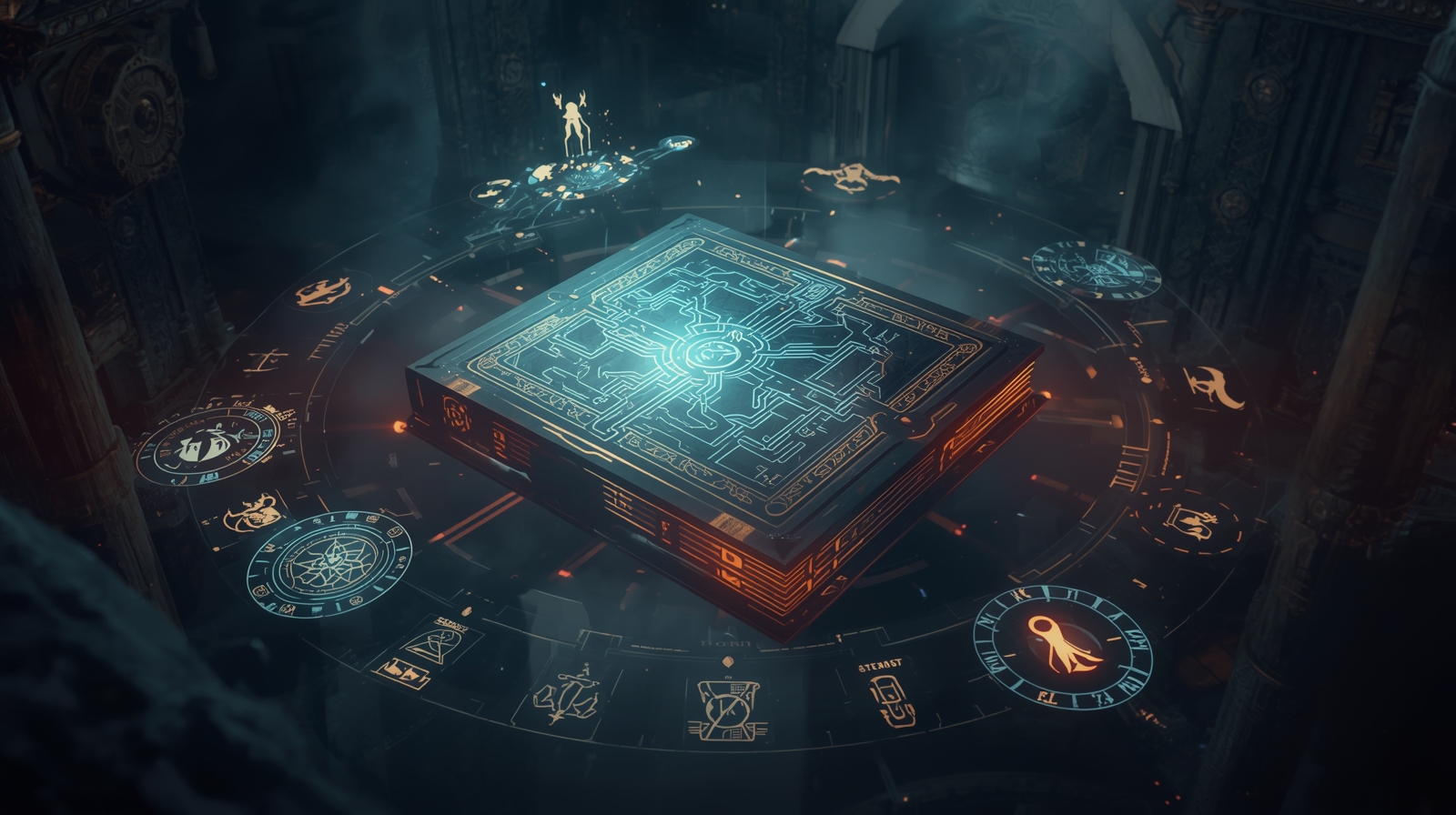
- an arcano-tech tablet recovered from an ancient civilization,
- a guild archivist’s data terminal,
- a magical codex,
- a traveler’s rotating star-map,
- or a hybrid esoteric UI that feels like it came from the world itself.
Worldbuilders think in vibes, tone, metaphor, and theme. Most WordPress templates think in columns, hero banners, and “Buy Now” buttons.
This mismatch creates friction. And friction kills immersion.
The Platform Is Powerful — But the Market Isn’t Speaking to Creators
WordPress is flexible enough to support extraordinarily rich worldbuilding experiences. You can build:
- interactive compendiums
- dynamic timelines
- branching lore trees
- usable-in-game databases
- character galleries
- digital grimoires
- location-based navigation systems
- immersive, animated UI
But almost none of this is accessible out of the box. And for creators without development backgrounds, custom-building these features is overwhelming.
In other words:
WordPress has the potential, but the ecosystem hasn’t met the demand.
The tools assume a business problem. Worldbuilders have a narrative problem.
There is a massive, underserved audience of creators who:
- want worldbuilding-specific features,
- value expressive, thematic design,
- care deeply about aesthetics that reinforce immersion,
- and want their sites to feel like extensions of their universes—not corporate templates with fantasy wallpaper.
And there are millions of them: writers, gamemasters, novelists, indie devs, transmedia creators, fandom archivists, narrative designers, and multiverse-makers.
They’re passionate. They’re creative. They’re loyal to tools that respect their vision.
Yet the WordPress market hasn’t built a home for them.
It’s Time for WordPress to Evolve for Storytellers
Storytelling is one of the most powerful engines of culture—and the creators who worldbuild aren’t hobbyists. They’re architects of ideas, communities, and immersive experiences.
These creators need:
- customizable lore databases
- dynamic systems visualizations
- in-universe UI elements
- templates built for narrative immersion
- a design language that feels mythic, futuristic, magical, or arcano-tech—on purpose
- and tools that help visitors interact with the world, not just read about it
WordPress can absolutely be the backbone of those worlds.
But only if someone builds the tools.
The storytellers are here.
The demand is real.
And the first ecosystem to take worldbuilders seriously is going to define a new creative market segment—one where imagination, interactivity, and immersion matter just as much as analytics and SEO.
Worldbuilders deserve tools that treat their work as art, not content.
And when the tools finally catch up, creators will build digital worlds that readers, players, and communities will never forget.